Reading the Table: Intuition as a Skill
How observation, pattern recognition and self-awareness create better poker decisions — and why gut reads are trainable rather than magic.
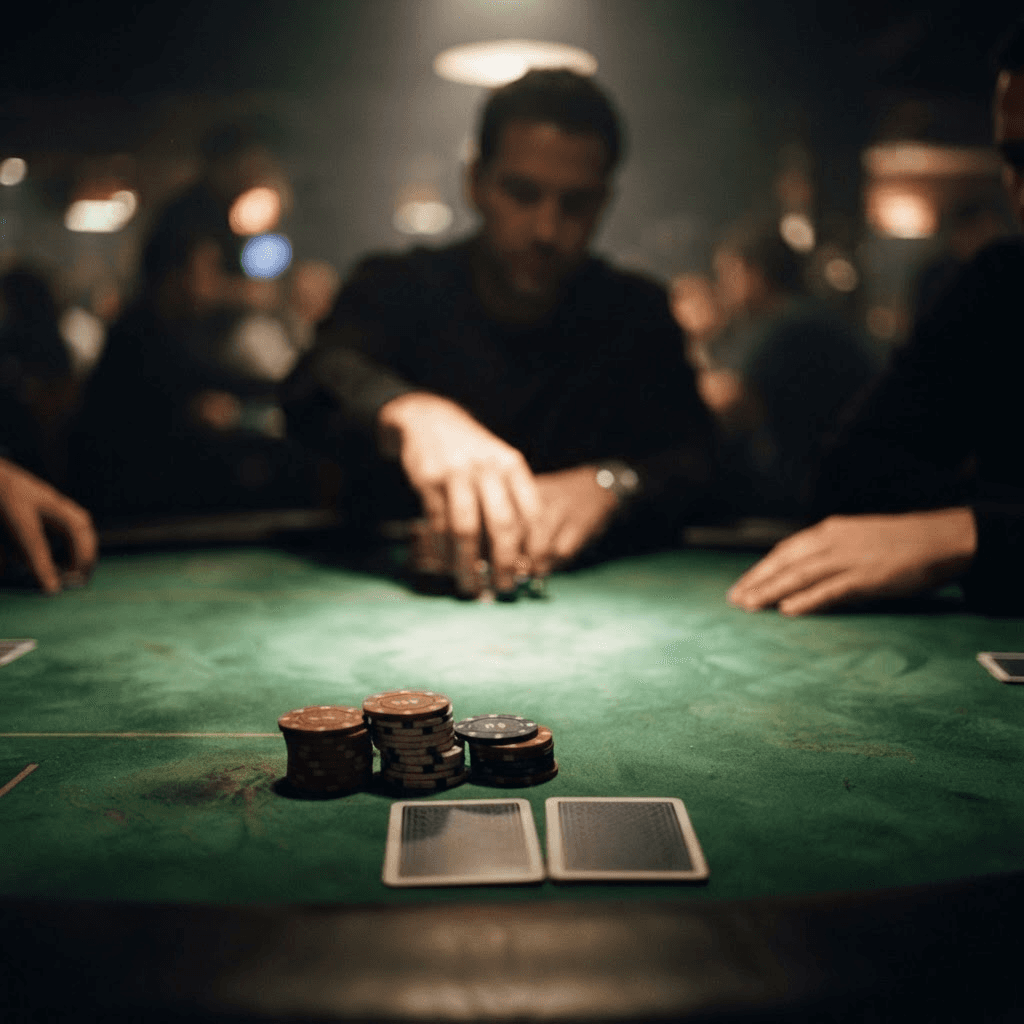
Poker is often described as a game of cards, mathematics and probability. That description is accurate, but incomplete.
The cards establish the possibilities. Mathematics helps us measure risk and reward. Strategy gives us a framework for making profitable decisions. Yet poker is ultimately played by human beings, and human beings reveal information.
They reveal it through their choices, timing, bet sizing, posture, breathing, conversation, emotional reactions and changes in behavior. They reveal it through the hands they show down and the hands they avoid showing. They reveal it through what they do repeatedly, and through the moments when they suddenly do something different.
Learning to recognize and interpret that information is what I call reading the table.
Reading the table is not a supernatural gift reserved for a handful of unusually perceptive players. It is a trainable poker skill built through observation, technical study, experience, emotional awareness and disciplined review.
Intuition is not the opposite of strategy. Intuition is what can happen when strategy, experience and awareness begin working together quickly enough to guide a decision in real time.
What Does It Mean to Read the Table?
Reading the table means understanding more than the cards in front of you. It means observing the entire environment in which the hand is taking place.
A player who reads the table is paying attention to questions such as:
- Who is playing confidently?
- Who is becoming impatient?
- Who is protecting a short stack?
- Who appears uncomfortable with the stakes?
- Who is entering too many pots?
- Who has tightened up near the money bubble?
- Who is trying to recover from a recent loss?
- Which players understand position?
- Which players change bet sizing according to hand strength?
- How does each opponent react when challenged?
These observations do not replace range analysis, pot odds or expected value. They help us apply those concepts to the actual people sitting at the table.
A solver can tell us how a theoretically balanced range might behave. It cannot automatically tell us whether the player in Seat 4 has bluffed once in the past six hours, whether the player in Seat 7 is terrified of missing the money, or whether the table's most aggressive player has suddenly become unusually quiet.
Those details matter. Poker is a game of incomplete information, and the player who gathers more legitimate information has more material with which to make a decision.
Intuition Is Usually Information Arriving Quickly
People sometimes speak about intuition as though it appears from nowhere. In reality, poker intuition often develops from information the brain has been collecting and organizing over time.
You may have watched an opponent handle chips in dozens of hands. You may have noticed that they speak comfortably when drawing but become silent when holding a made hand. You may remember that they used a small continuation bet with medium-strength holdings and larger sizing with polarized hands.
During a later hand, something may suddenly feel unusual. You might not immediately be able to explain every detail, but your brain has recognized a break in the pattern.
That is often what intuition is: rapid pattern recognition. The intuitive signal may arrive before the complete explanation.
A disciplined player does not automatically obey that signal. The player pauses and investigates it. What changed? Does the betting line make sense? Is the opponent representing enough value hands? Is the bet size consistent with previous behavior? Am I observing real information, or am I allowing fear, ego or wishful thinking to influence me?
Intuition should begin an inquiry, not end one.
The Difference Between Intuition and Guessing
Guessing occurs when a player makes a decision without a reliable process. Intuition is different. Trained poker intuition is supported by knowledge, observation and experience. It may operate quickly, but it is not empty.
Consider two players facing a large river bet.
The first player says, "I just feel like he is bluffing," and calls without examining the action.
The second player notices that the opponent's preflop range was wide, the turn sizing was inconsistent with the strongest value hands, several natural draws missed, and the river bet was made much faster than the opponent's previous value bets. The player also remembers that this opponent has shown a willingness to overbluff.
Both players may describe having a feeling. Only one has built that feeling on a meaningful structure.
The objective is not to eliminate instinct. It is to improve the quality of the information feeding it.
The Technical Foundation of Intuitive Poker
Good intuition becomes more reliable when it rests on strong fundamentals. A player who understands position, ranges, stack depth, board texture, equity, combinatorics and tournament incentives can interpret behavior more accurately.
Imagine an opponent makes an unusually large bet on the river. Behavior alone cannot tell you what to do. You still need to understand:
- Which value hands are realistically available
- Which draws missed
- Whether your hand blocks value or bluffs
- What price you are receiving
- How the previous streets shaped each range
- Whether tournament pressure changes the decision
- How frequently you need to be correct
Technical understanding creates the baseline. Once you know what a balanced or strategically reasonable player might do, you can begin identifying where this specific opponent may be deviating. Without that baseline, a player may treat ordinary behavior as meaningful or miss a genuine inconsistency.
Intuition is strongest when it works alongside logic.
Reading Betting Patterns
Betting patterns are among the most dependable forms of information in poker because they reflect actual decisions. Players often reveal tendencies through:
- Preflop raise sizes
- Limping ranges
- Continuation-bet frequency
- Turn aggression
- River sizing
- Responses to check-raises
- Willingness to bluff missed draws
- Reluctance to value-bet thinly
- Changes in sizing according to hand strength
Suppose a player normally bets one-third of the pot after the flop but suddenly uses a full-pot bet. That does not automatically mean strength or weakness. It means something changed.
The intuitive player notices the change and begins asking why. Is the board unusually wet? Is the opponent protecting a vulnerable hand? Is the player attempting to intimidate the table? Is this sizing used only with strong value? Has the player recently lost a large pot and become emotionally aggressive?
One unusual action does not provide certainty. It provides a clue. Reading the table means collecting clues and interpreting them together.
Timing as Information
Timing can reveal confidence, uncertainty, preparation or discomfort.
A snap-call may indicate that the decision was already made before the bet occurred. A long pause may reflect genuine difficulty, or an attempt to appear conflicted. An instant river bet may suggest the player had already planned the action on the previous street. A player who normally acts quickly but suddenly takes a long time may be facing an unfamiliar decision.
Timing tells are most useful when compared with the individual player's normal rhythm. There is no universal rule that says fast means weak or slow means strong. Experienced players may deliberately manipulate timing. Recreational players may act quickly with both very strong and very weak hands. Some people simply take the same amount of time with everything.
The important question is not "what does fast action mean?" The better question is "what does fast action mean from this player, in this situation, compared with how this player normally behaves?"
Intuition becomes accurate through context.
Physical Behavior and Live Reads
Physical behavior can provide valuable information, but it should be handled carefully.
Players may reveal changes through posture, breathing, eye movement, hand tension, chip handling or speech. However, one isolated movement is rarely enough to justify a major decision. A person may be trembling because of adrenaline, caffeine, anxiety, fatigue or excitement. That movement does not automatically reveal whether the hand is strong.
Live reads become more useful when they appear in clusters. For example, you may notice:
- A change in breathing
- Unusually rigid posture
- A sudden stop in conversation
- Different chip-handling behavior
- A bet size inconsistent with previous hands
- A betting line that contains too few natural bluffs
Each clue alone may be inconclusive. Together, they may create a meaningful pattern.
The strongest live reads combine physical information with strategic logic. The weakest rely on a single dramatic gesture and ignore everything else.
Reading Emotional States
Poker players do not leave their emotions outside the card room. Frustration, fear, confidence, boredom, embarrassment and excitement can all influence strategy.
A player who recently lost a large pot may become overly aggressive. Another may become excessively cautious. A player approaching the money bubble may stop defending blinds. A player who has doubled up may begin entering too many pots. Someone facing a well-known professional may either avoid confrontation or attempt an unnecessary bluff to prove something.
Reading emotional states does not mean diagnosing people. It means recognizing that behavior often changes after emotionally significant events. Ask yourself what has happened to this player recently. Has the player's pace changed? Has the range widened or tightened? Is the player still making deliberate decisions, or reacting emotionally? What does this player appear to want right now?
Sometimes a person wants to win chips. Sometimes they want to survive. Sometimes they want revenge. Sometimes they want validation.
Understanding the motivation behind an action can be as important as understanding the cards that might produce it.
Reading the Entire Table, Not Just One Opponent
Intuitive poker is not limited to heads-up observation. Every table develops a personality.
Some tables are passive and friendly. Some are tense and aggressive. Some contain several players trying to avoid elimination. Others become chaotic because one loose player encourages everyone else to widen their ranges.
A strong table reader notices:
- Who controls the pace
- Which players influence others
- Where the easiest chips may be available
- Which seats are becoming frustrated
- Who is waiting for premium hands
- Who understands stack pressure
- Who is likely to defend against aggression
- How your own image is changing
Your table image is part of the environment. How do other players see you? Do they believe you are tight? Have they watched you bluff? Do they think you are emotionally affected by a previous hand? Are they giving your raises too much respect, or not enough?
Reading the table includes understanding how the table is reading you.
Self-Awareness: The Most Important Read
The most difficult player to read is often ourselves. We want to believe our decisions are objective, but poker exposes fear, ego, impatience, insecurity and emotional attachment.
A player may say, "My intuition told me to call," when the truth is that the player hated the idea of being bluffed. Another may say, "I had a bad feeling," when fear of elimination caused an overly tight fold. A player may mistake excitement for confidence, or anxiety for danger.
Before trusting an intuitive signal, check your internal condition:
- Am I calm enough to evaluate this hand clearly?
- Am I trying to recover chips I recently lost?
- Am I emotionally attached to my hand?
- Am I afraid of looking foolish?
- Do I want this opponent to be bluffing?
- Am I tired, hungry or distracted?
- Would I make the same decision if the pot were smaller?
- Am I responding to the current hand or the previous one?
This internal review does not weaken intuition. It cleans the lens through which intuition operates. The better you understand yourself, the easier it becomes to distinguish insight from emotional noise.
Intuition Versus Anxiety
This distinction is especially important. Intuition often feels quiet, steady and observational. Anxiety often feels urgent, repetitive and catastrophic.
Intuition might say: something about this line is inconsistent.
Anxiety might say: you are about to make a terrible mistake, everyone will see it, you must escape this decision immediately.
Intuition invites examination. Anxiety demands certainty.
Poker cannot provide certainty. It requires us to make the best decision available while accepting that we may still lose. A strong intuitive player learns to tolerate uncertainty without allowing discomfort to become the decision-maker.
Intuition Versus Ego
Ego can imitate confidence. It may tell us: I cannot let this player push me around. I am too good to fold. I know exactly what he is doing. I need to show everyone that I made the right read.
These thoughts are dangerous because they shift the objective from making a profitable decision to protecting an identity.
Poker does not care whether a fold feels impressive. It does not reward us for proving that we are fearless. Sometimes the strongest play is aggressive. Sometimes the strongest play is walking away from the hand.
Intuition should help us understand the situation, not defend our pride.
Building a Personal Information Database
Every hand provides information, even when you are not involved.
Watch how players construct pots. Notice which hands they show down. Observe how they react to aggression. Compare their bet sizes across different situations.
When a player reveals a hand, mentally replay the action. Did the line make sense? Was there a clue you noticed but did not understand? Did the player's behavior change? What can this showdown teach you about future hands?
A player who watches only their own cards is missing most of the available education. The table is giving lessons continuously. The challenge is remaining attentive enough to receive them.
How Study Develops Intuition
Intuition improves through structured training. Hand reviews teach us to connect actions with ranges. Quizzes require us to choose before seeing the answer. Solver work establishes strategic baselines. Population studies reveal common tendencies. Live experience teaches us how people behave when money and pressure are real. Coaching helps identify patterns we may not see on our own.
Over time, these lessons become integrated. A player no longer needs to consciously reconstruct every concept during every hand. The mind begins recognizing familiar structures.
This is similar to an experienced athlete reacting to a developing play, or a skilled salesperson sensing that a client's stated objection is not the real concern. They are not guessing. They are recognizing patterns created through repeated exposure and feedback.
Intuition is often experience operating at speed.
A Practical Intuitive Poker Process
When an important decision arises, I encourage players to move through a simple process.
Establish the strategic baseline
What would a technically sound range look like here? Consider position, stack depth, board texture, bet size, pot odds and tournament stage.
Identify the player
What have you observed about this opponent? Are they loose, tight, aggressive, passive, experienced, fearful or unpredictable?
Notice what changed
Did the sizing, timing, posture, speech or emotional state differ from earlier hands?
Check your internal state
Are you calm and present, or are fear, ego and frustration influencing you?
Test the story
Does the opponent's entire line make sense? Which value hands and bluffs realistically arrive here?
Make the best total-information decision
Combine the technical framework with the reliable player-specific information.
Accept the outcome
You can make the correct decision and lose the hand.
Review the process
Do not ask only whether you won. Ask whether your reasoning was sound.
This process protects players from two extremes: ignoring valuable intuition, and blindly obeying every feeling.
How to Practice Reading the Table
Begin by choosing one observation category per session. During one tournament, focus on bet sizing. During another, study timing. In another session, pay attention to how players react after losing pots.
Trying to observe everything immediately can become overwhelming. Focused observation builds the skill gradually.
You can also keep brief notes after a session:
- What tendencies did I identify?
- Which reads were accurate?
- Which reads were based on assumptions?
- When did my emotions distort my judgment?
- Which player surprised me?
- What information did I miss?
- Did I act when the evidence supported my intuition?
The purpose is not to create a record proving that your reads are always right. The purpose is to improve the process that produces them.
Why Intuition Matters in Tournament Poker
Tournament poker constantly changes. Blinds rise. Stacks shrink. Tables break. New opponents arrive. Payout pressure increases. Fatigue accumulates. A strategy that was correct two hours earlier may no longer apply.
This makes adaptability essential.
Near the money bubble, some players become dramatically tighter. Others recognize that fear and increase their aggression. At a final table, pay jumps may change calling ranges. A player pursuing a personal-best score may make choices that differ from someone focused only on long-term expected value.
Intuition helps us recognize these human incentives. A chart may describe how a rational player should respond to ICM. Observation helps reveal whether the actual opponent understands or emotionally feels that pressure.
Tournament poker rewards the player who can update quickly.
When Not to Trust a Read
Not every intuitive signal deserves action. Be cautious when:
- You have very little history with the opponent
- Your conclusion depends on one physical movement
- The strategic evidence strongly contradicts the read
- You are emotionally affected by a recent hand
- You desperately want a particular conclusion to be true
- The opponent is capable of manipulating behavior
- You cannot identify any information supporting the feeling
- Fatigue or anxiety has reduced your clarity
Sometimes the correct response to uncertainty is not a heroic call or dramatic fold. Sometimes it is choosing the mathematically sound baseline.
Intuition is most valuable when it provides credible information, not when it gives us an excuse to abandon discipline.
Reading the Table Inside Joey's Angels
Reading the table is a central part of Joey's Angels Women's Intuitive Poker School.
Every student brings different natural abilities. Some players notice physical behavior quickly. Some understand mathematical patterns. Some hear subtle changes in language. Some remember previous hands in extraordinary detail. Others feel the table's emotional movement before they can explain it.
My role is to help each student develop those strengths while building the technical foundation needed to interpret them responsibly. We work on more than identifying tells. We examine ranges, frequencies, stack sizes, tournament incentives, emotional regulation and self-trust.
Students learn that intuition is not permission to play recklessly. It is a skill to be developed, tested and refined.
The goal is not to turn every Angel into the same kind of player. The goal is to help each woman understand how she receives information, how her emotions influence her decisions, and how she can combine strategy with awareness.
The Deeper Lesson of Reading the Table
Poker teaches us that important information is not always spoken directly. People communicate through choices, habits, reactions and inconsistencies.
That lesson extends beyond the card room. Sales professionals read a client's hesitation. Athletes recognize changes in an opponent's rhythm. Business leaders notice what a team is reluctant to say. Parents sense when a child's words do not match their emotional state.
Intuition becomes valuable in every part of life when it is combined with listening, observation, experience and honest self-awareness.
The skill is not predicting the future. The skill is becoming more present to what is happening now.
Final Thoughts: Intuition Is Trained Awareness
Reading the table is not magic. It is awareness sharpened by study. It is pattern recognition strengthened by experience. It is self-trust balanced by humility. It is the ability to notice a signal without immediately becoming attached to it.
The best intuitive players remain curious. They do not say, "I know." They ask, "What am I seeing, what might it mean, and does the complete evidence support it?"
Poker will always contain uncertainty. We will never see every card or understand every motive. We will sometimes make an excellent read and still lose. We will sometimes interpret a situation incorrectly.
The goal is not perfect prediction. The goal is better decision-making.
Study the mathematics. Understand the ranges. Watch the action. Observe the person. Check your emotions. Test the story. Trust the process.
That is how intuition becomes a skill.
Develop Your Ability to Read the Table
Through Joey Intuitive Poker and Joey's Angels Women's Intuitive Poker School, students learn how to:
- Recognize player tendencies
- Improve live reads
- Understand betting patterns
- Separate intuition from anxiety
- Control emotional reactions
- Analyze ranges and frequencies
- Trust their preparation
- Make clearer tournament decisions
- Build confidence under pressure
The cards tell part of the story. Learn to read everything else.
Frequently Asked Questions
Is poker intuition a natural talent?
Some people begin with strong observational instincts, but intuition can be developed through study, repetition, feedback, hand review and live experience.
Are physical tells reliable?
They can provide useful information, but they should rarely be used alone. The strongest reads combine behavior with betting patterns, timing, range logic and context.
Does intuitive poker replace mathematics?
No. Mathematics and strategy create the foundation. Intuition helps players interpret opponent-specific information and recognize when a profitable adjustment may exist.
How can I distinguish intuition from anxiety?
Intuition is often calm and specific. Anxiety tends to feel urgent, repetitive and focused on avoiding disaster. Check the signal against the strategic evidence before acting.
Can beginners learn to read the table?
Yes. Beginners can start by observing one category at a time, such as bet sizing, timing or reactions after losing pots, while continuing to build technical fundamentals.
Does reading the table work online?
Yes. Online players can observe timing, sizing, frequency, repeated opponent behavior and population tendencies, although physical information is unavailable.
Topics
- #poker
- #pokerstrategy
- #livepoker
- #tells
- #pokermindset
- #observation